
The black cat’s name is Yamazaki, like the bread you can buy in the supermarket. We tried to feed her Yamazaki bread but she would not eat it. So, we called her Yamazaki. She was one of many stray cats that roam around our village.
I think she had her territory around our house. She started hanging around the house watching us and I began to put out some food for her on a plate and she came to fetch it. At first she would just get it and run away with it to eat it somewhere else. Later she started eating from the plate but she did not tolerate anyone nearby. It was difficult to put something on the plate when she was around because she would lash out thinking that we would take it away again.
She had frequent injuries from fights with other cats. Of course it was out of question to touch her. She did not make any sound usually but once I heard her meow very quietly.
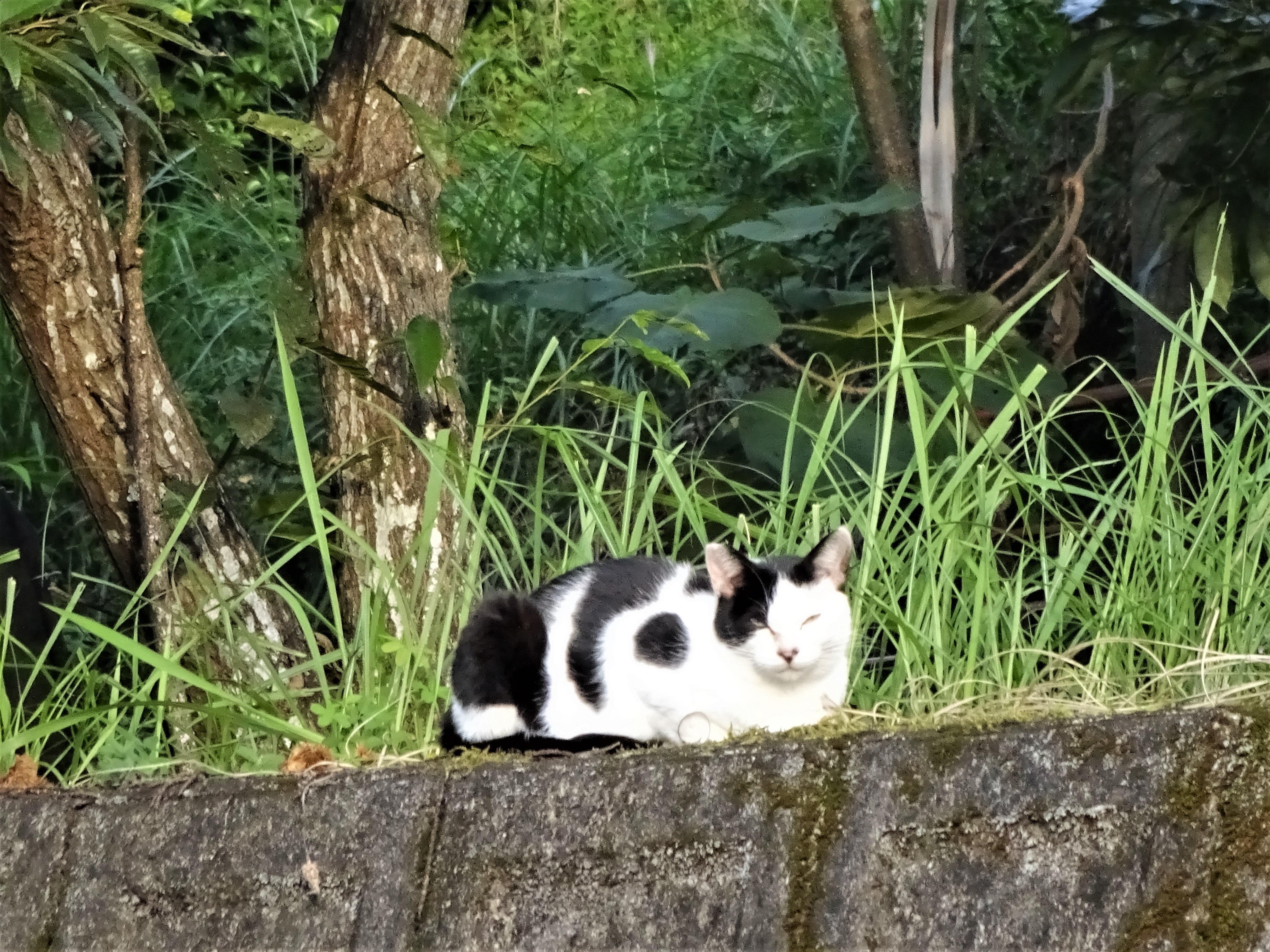
One day Yamazaki came with a kitten, black and white. She turned out to be Yamazaki’s daughter. She would also start hanging around the house, together with Yamazaki and also by herself, and watch us, from the same spot that Yamazaki watched us. Namely from the top of a wall opposite the house.
She would join Yamazaki to get some food but they would fight over the food. Yamazaki was very jealous, even of her own daughter. So, I put out two plates, one for each cat.
The kitten would eat huge amounts of food. So, we called her Big Eater. She had that name for a while but this is not a nice name for a girl. We renamed her Maoi. Miao is the sound a cat makes in German, the English meow. I turned the letters around and it became Maoi.
Yamazaki and Maoi started to sit near the house, and even in front of the door or at the entrance.
Our landlady got furious. She hates cats. She frequently came to check whether the cats were there and she would scare them off. She started to tell me off for having the cats around. She said they are thieves and bad. All farmers around the village would hate cats, she said. But, I think it was mainly her who hated cats. For what reason I never found out. This got to the point when she even threatened that we would need to leave the house if we continued to keep the cats.
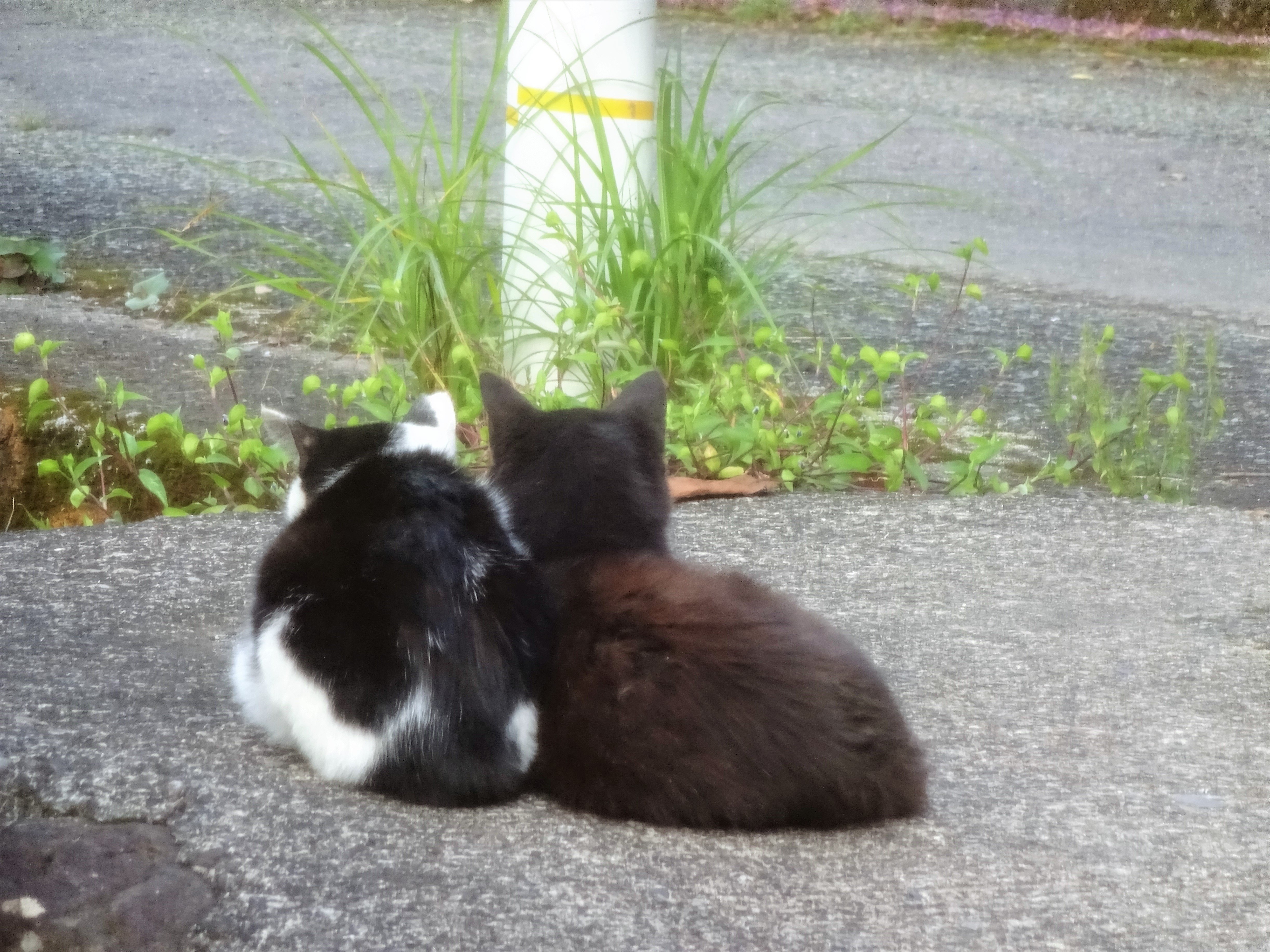
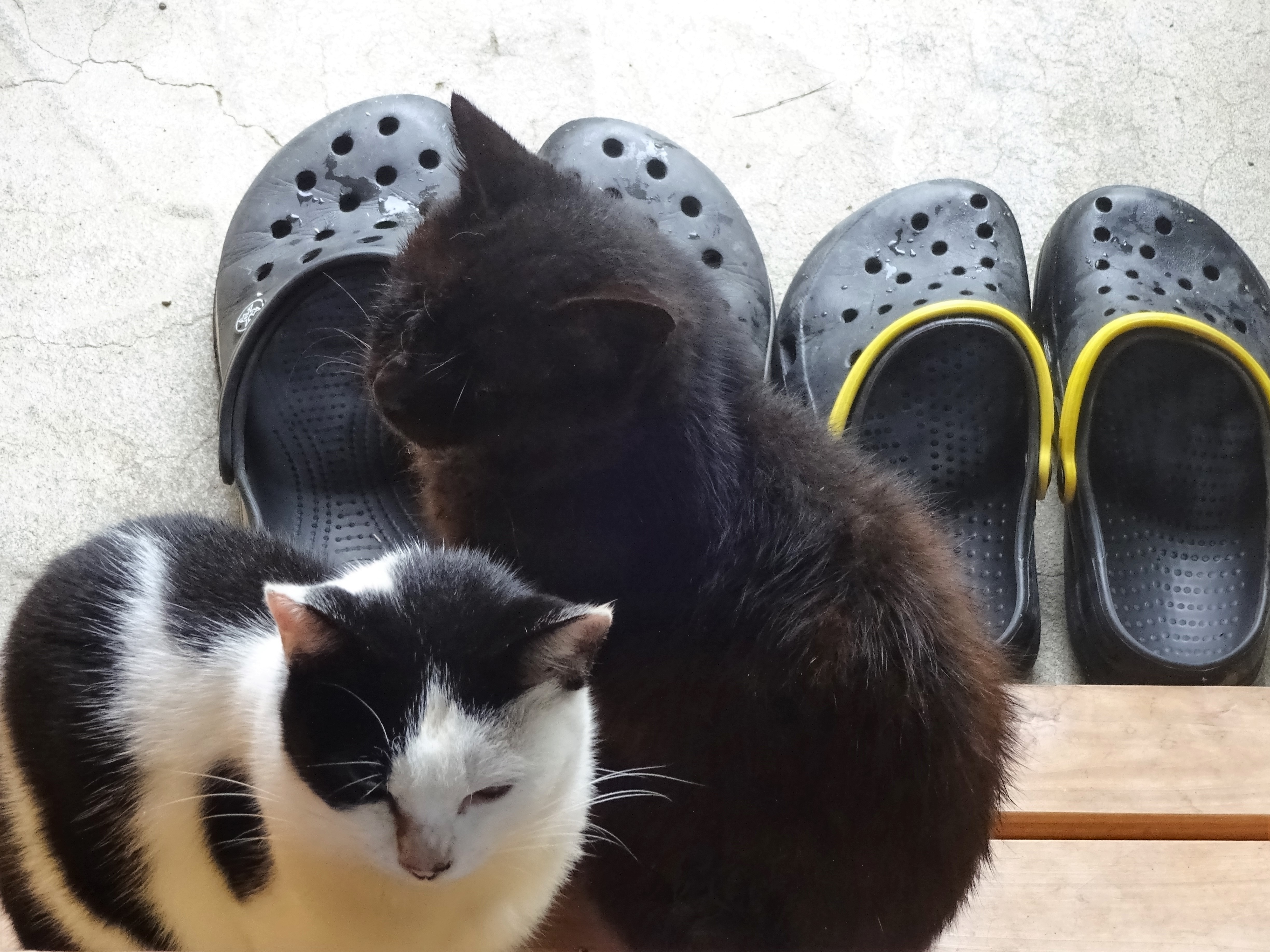
One day Yamazaki and Maoi sat together on the front porch, close to each other. I took a photo as it looked so cozy. This was the last time that I saw Yamazaki. I think she went to the forest and died. I had noticed that she had gotten sick. She began drooling from her mouth and her fur looked more and more unkempt. It seemed that she was not able to bend properly anymore to take care of her fur. I don’t know what kind of sickness it was but I continued feeding her until the day she disappeared.
Then there was Maoi. She kept coming every day, sometimes twice a day, and stayed longer bit by bit. She meowed very loudly demanding food and attention. I continued to feed her despite the landlady’s furious threats. I could not touch her but she began to rub against my legs.
As she was a stray cat, she did not live in our house but she came in and would stay for a while. I don’t know where she actually slept. Somewhere outside and nearby. Maybe in the shed opposite the house?
On closer inspection I noticed that the end part of one of her ears was cut of. Later I learned that this was the way cats were marked if they had been neutered. At least this is what I think it meant. Since she did not have an owner, there was no way of knowing for sure.
Maoi…we spent many nice days sitting in front of the house, in all seasons. I loved this cat. I miss Maoi!









 Kii Retreats