I am from East Germany and I have been in Japan for 15 years now. In July 2011 I moved out of Tokyo and to the south of Wakayama Prefecture, by choice! From the Japanese capital to the deep Japanese countryside - what a change!
An ocean of plum blossoms heralds the beginning of spring. Time to get ready for your first picnic of the year.
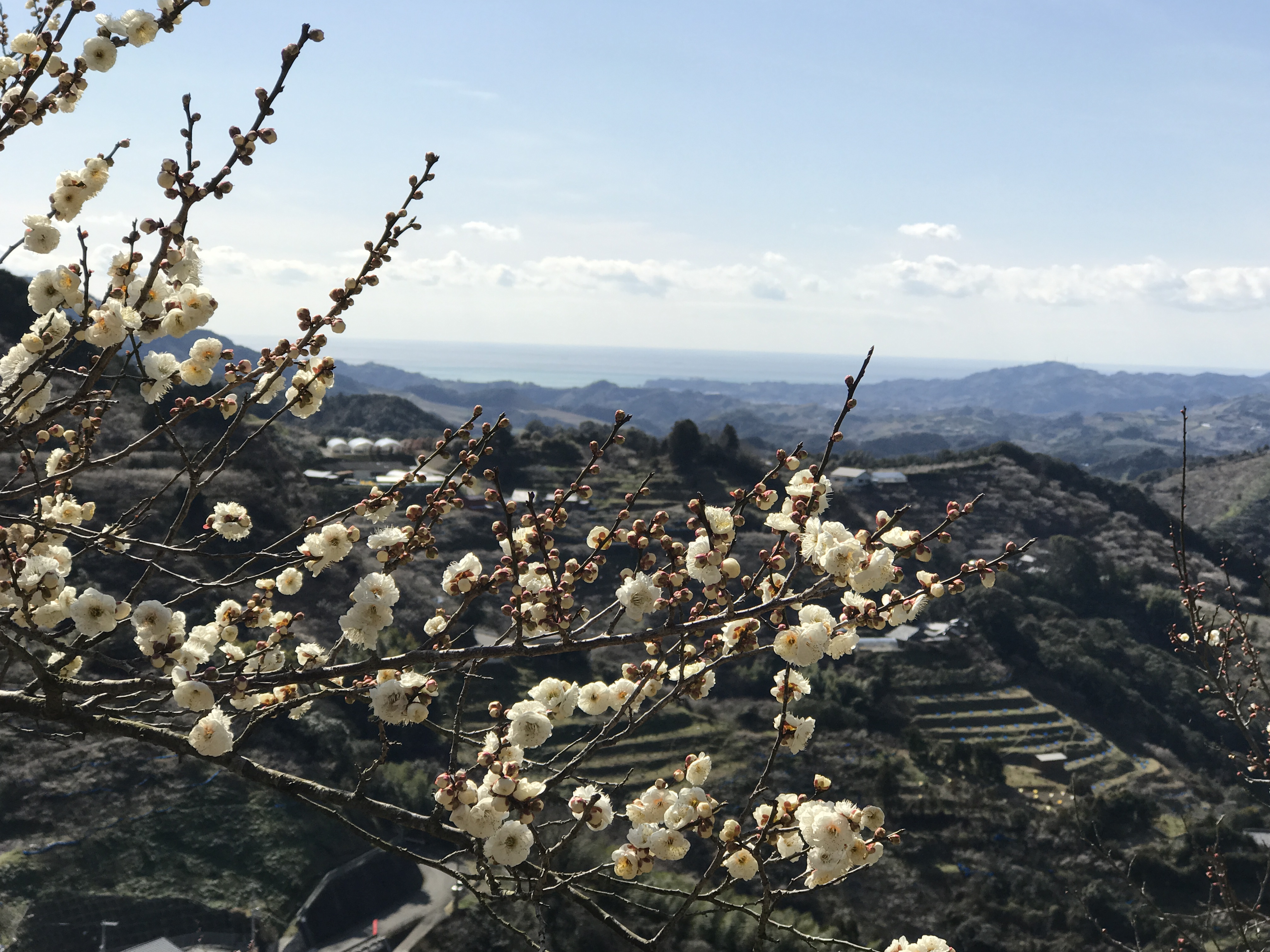
In February, plum blossoms are in full bloom at the Kishu Ishigami Tanabe Ume Orchards in Wakayama. More than 300,000 ume trees cover the hillsides that stretch out right to the Pacific Ocean in the distance. The view is breath-taking.
This is a Feature article that was published in Kansai Scene magazine in January 2017.
The planted patch of Sakura trees at the Torii in Oyunohara is a spectacular sight, but I also like Yama-sakura, which grow wild in the forests and mountains. Planted Sakura in the villages and wild Sakura in the mountains complement each other well.
Visitors to Hongu Town in the Kumano area will notice a bare-looking mountain slope. This is Dainichi Mountain; walkers of the Kumano Kodo trails will cross it on the Dainichi-goe trail. The trail is in the forest and walkers do not see this empty lot, but it is very visible from the main street of Hongu.
A local NPO set out to do something about this eye sore. They were lucky to receive a donation for buying tree seedlings from a large supermarket chain.
The actual planting of the young trees was done by volunteers from the local communities in the Kumano area.
Usually it is not possible to drive up to this mountain site but on the tree-planting day, the road blockage was lifted and we could drive up.
On the way up I noticed a neglected state of Jizo, a Buddhist deity. Clearly, this road is not much traveled these days.
The mountain slope were the reforestation project took place offers some spectacular views of Hongu Town, the Kumano River and of Oyunohara, the sandbank in the Kumano River where the Hongu Grand Shrine originally stood.
One can also see environmental damage on the mountain sites and on river banks; the dry Kumano River does not look very healthy.
Today it is February and we have come up here to cut weeds to give the young trees some breathing space.
After the work is done, everyone gathered for a hardy meal.
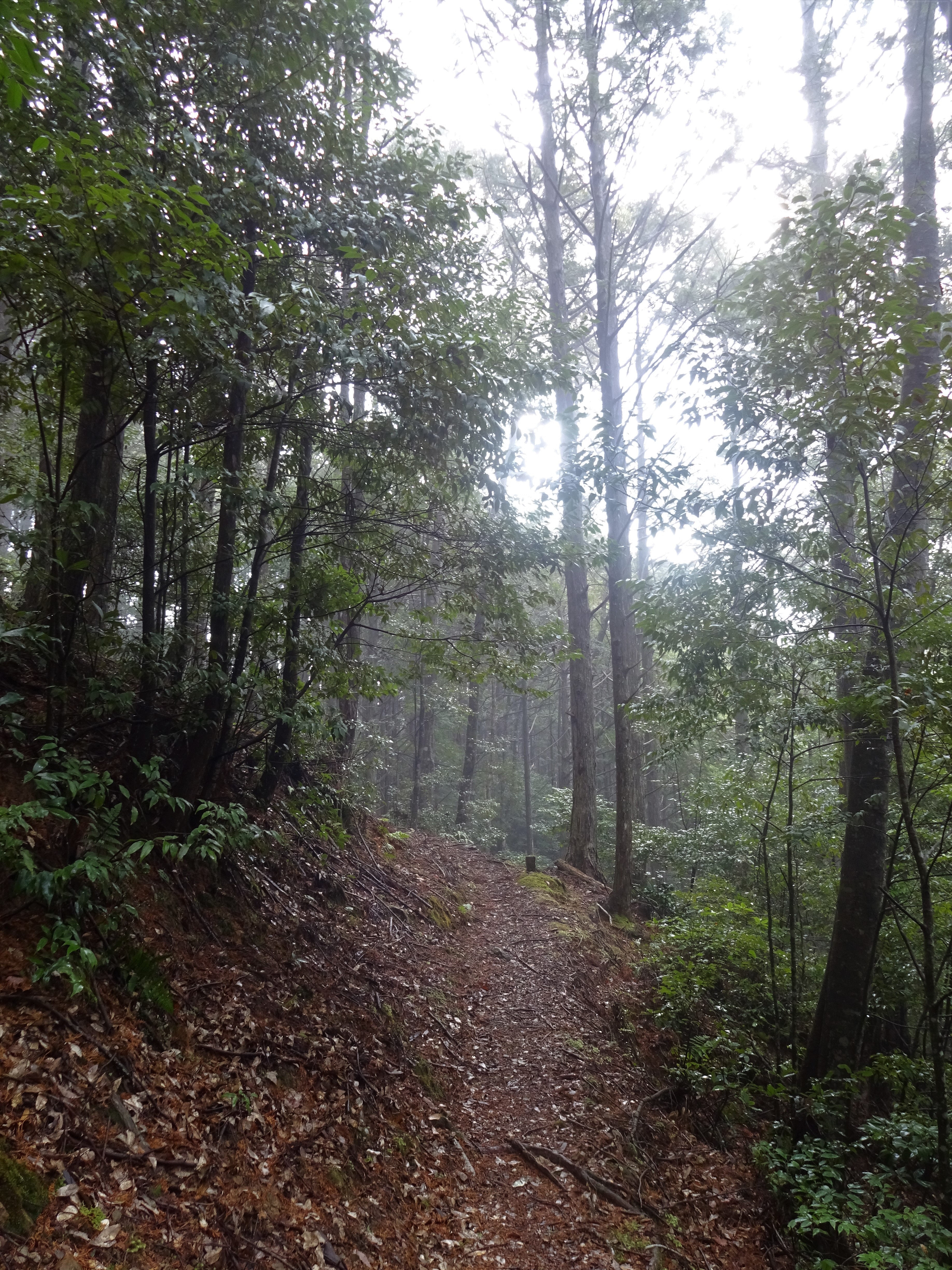
The Okugakemichi is a mountain trail that connects Yoshinoyama in the north of the Kii Peninsula with Hongu in the south. This trail is known as an ascetic training trail for followers of Shugendo, also called Yamabushi.
Nowadays many hikers and trail-runners also traverse the countless peaks that this trail follows over a distance of over 100km. If you are not a crazy trail-runner, then it might take you a whole week to walk from one end to the other.
Depending on where you start your journey, the part between Hongu and Tamaki is then either your last day or your first day on this long distance hike.
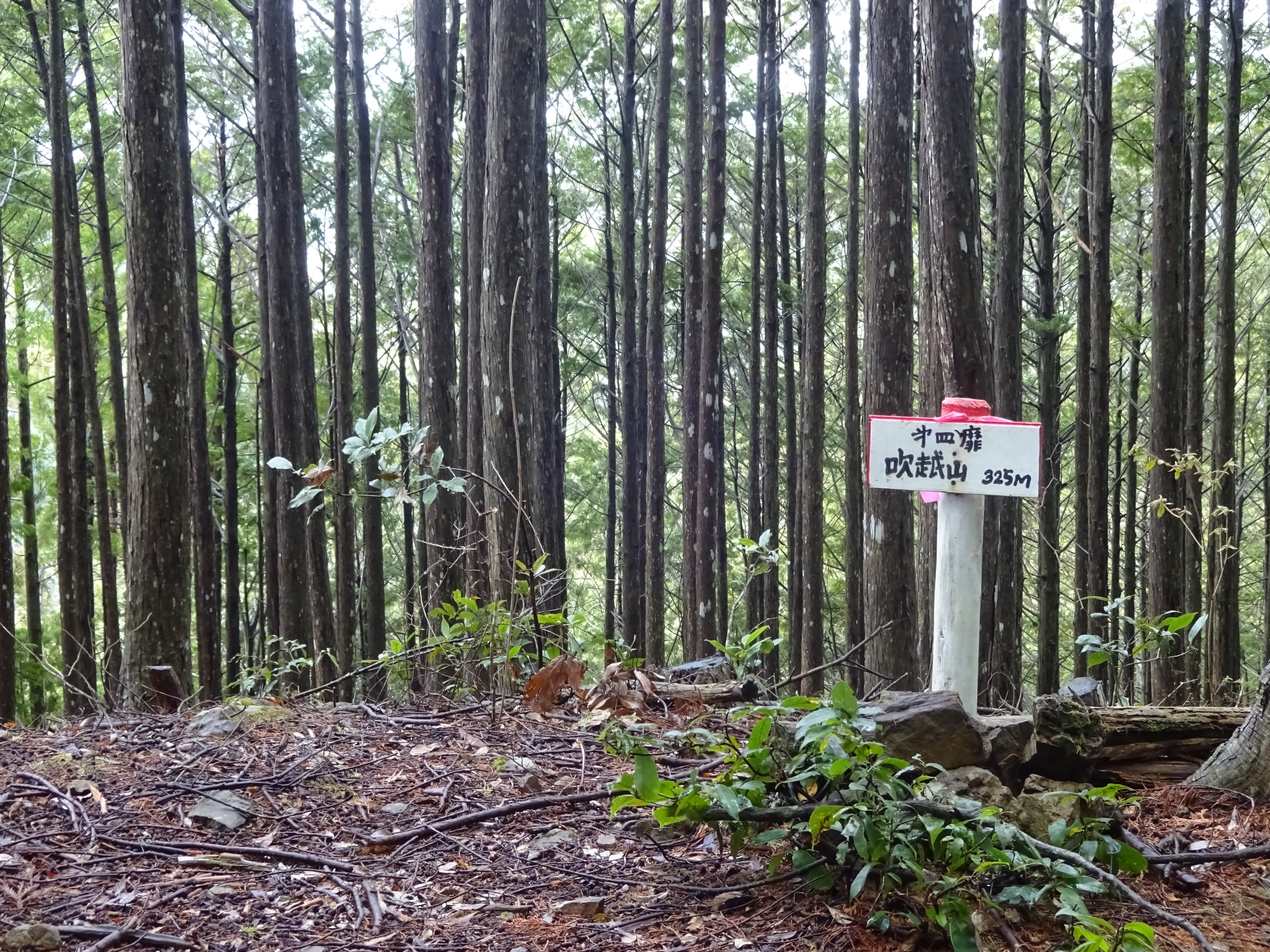
Followers of Shugendo do not just walk the trail but they also stop at certain places, called nabiki, where they say some prayers.
Sign-posting has become better over the years but most signs are still in Japanese. It takes a whole day to walk from Hongu to Tamaki and it is overall an uphill walk. There are no facilities along the trail, so hikers should be well prepared.
Deep mountains veiled in clouds and the distant ring of temple bells cast their mysterious spell over Koyasan, a Buddhist monastery hidden away on a plateau at 800 meters altitude. Surrounded by eight peaks and tense forest, Koyasan is less than two hours by train away from busy Osaka but it feels a world apart from the hustle and bustle of modern Japan.
Since 2004 Koyasan is part of the UNESCO Heritage “Sacred Sites and Pilgrimage Routes in the Kii Mountain.
Koyasan gives you a chance to sleep and eat like a monk in one of its temples and to observe monks’ prayer rituals close-up. Walking around Koyasan’s sights, you can explore the universe of esoteric beliefs and icons and connect with Japan’s most popular Saint.
Koyasan is home of the Shingon School of Esoteric Buddhism and one of Japan’s foremost spiritual centers.
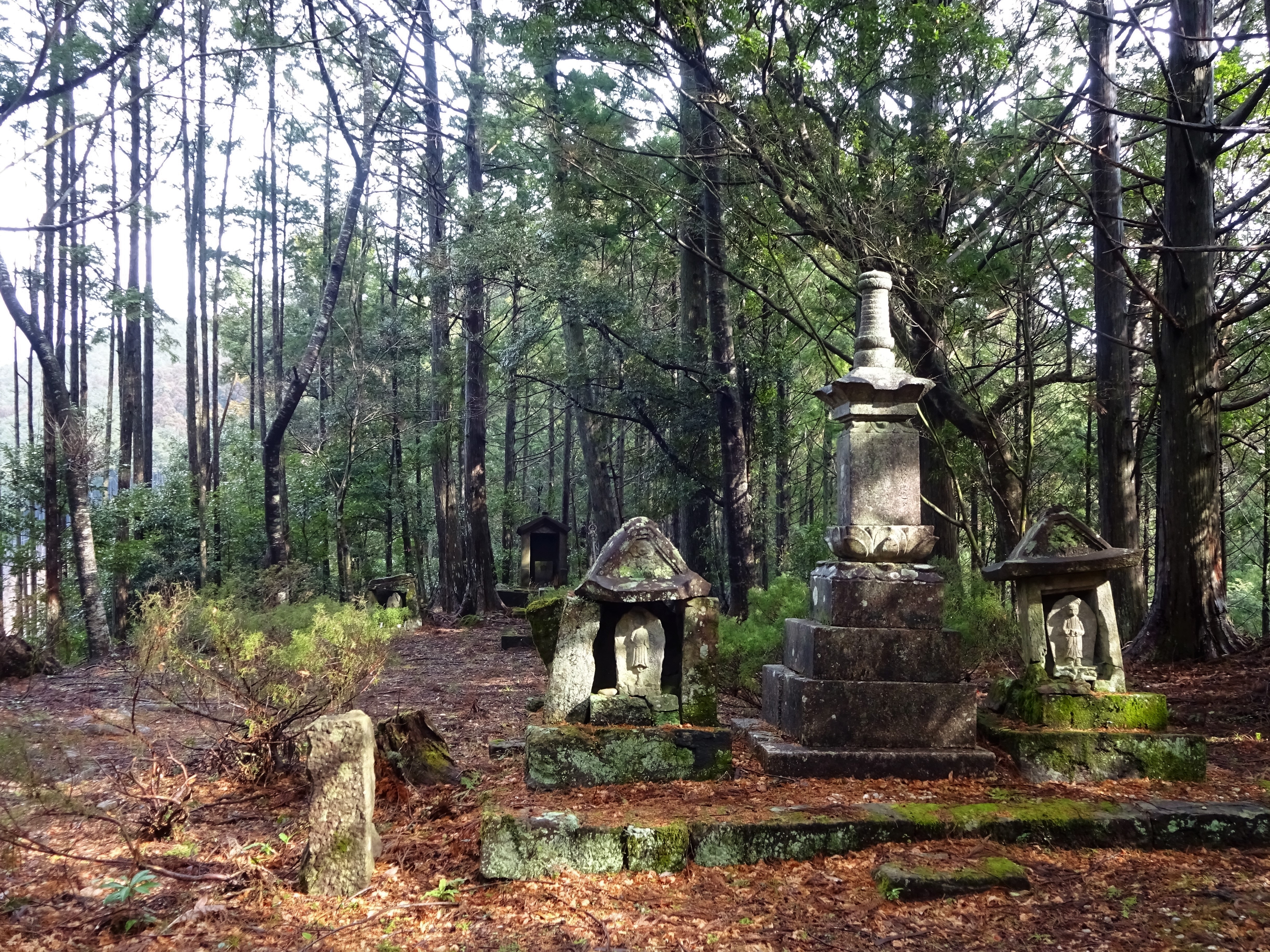
Located in the Eastern part of Koyasan is Okunoin, Japan’s largest graveyard (open 24/7; no entrance fee). Over 200,000 tombs, some ancient and some brand-new, are the resting places of famous samurai, wealthy industrialists, of heroes and no-name commoners. Walking through this graveyard along the two kilometres long path flanked by stone lanterns, you pass by countless weathered stupas with Sanskrit symbols, moss-covered statues of Buddhist deities and massive centuries-old cedar trees.
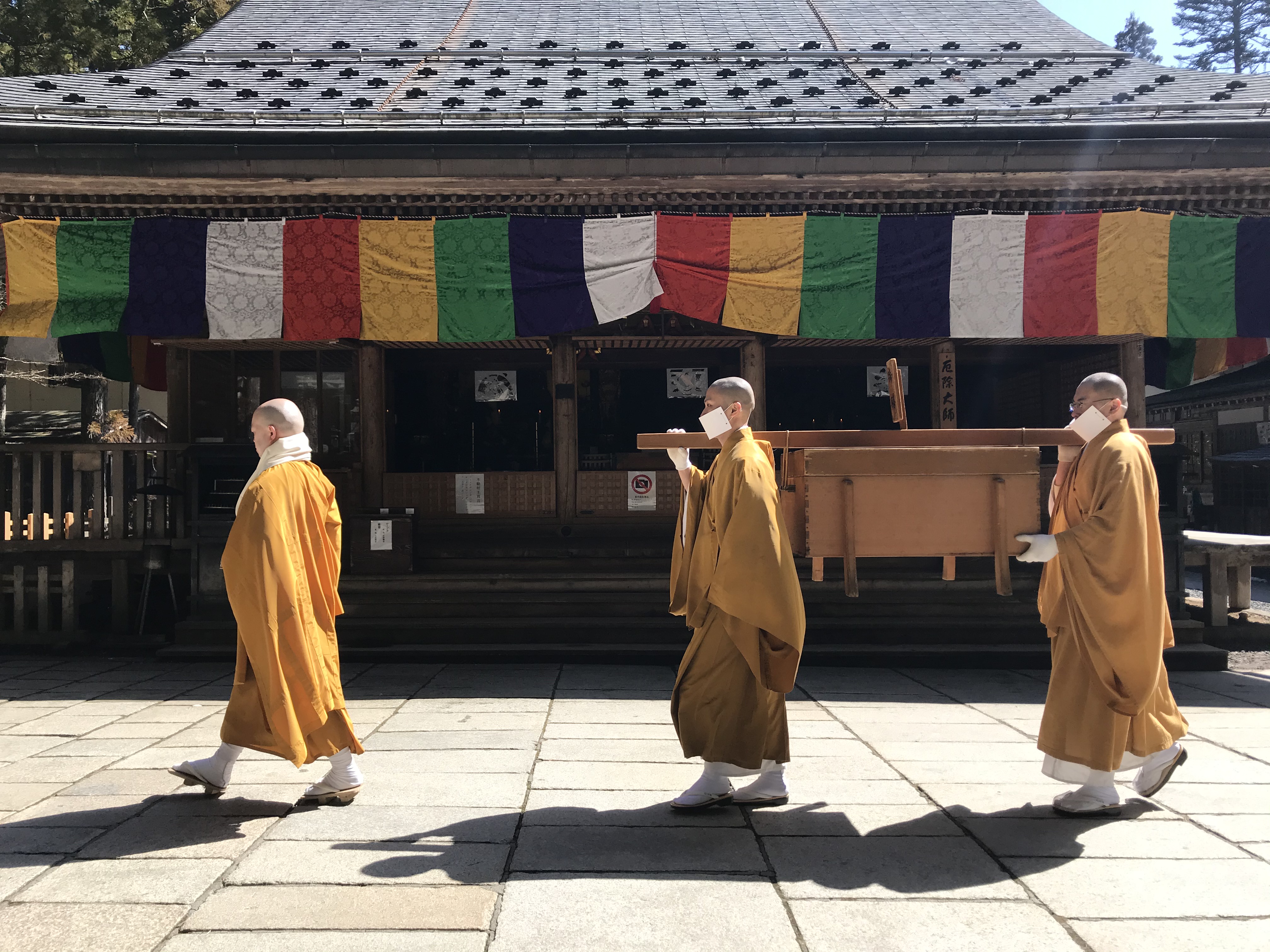
Wearing white-clad clothes, a hat and a staff, pilgrims head for the Gobyo, the mausoleum of Saint Kukai. Posthumously referred to as Kobo Daishi, the Great Teacher, he brought Shingon (True Word) Buddhism to Japan after receiving his initiation in China in the 8th century. Every day (5.30am and 10.30am) you can see saffron-robed monks carry a wooden tray with food to be offered to the Saint.
Kobo Daishi is believed to be alive in this world, resting in eternal mediation.
The Torodo (Lantern Hall) is a prayer chapel in front of the mausoleum (6:00 to 17:30; no entrance fee). Its ceiling is covered with 10,000 lanterns, all donated by devote believers. Here the heavy scent of incense wafts through the air and the sound of devotional chants echoes back from the forest.
In the West of Koyasan is the Danjo Garan, Koya’s central monastic complex (open 24/7; no entrance fee). Walk around and explore its temples and stupas whose origin date back to the founding of Koyasan as a Buddhist training ground.
In this compound standing almost fifty meters tall and lacquered in bright vermilion, the Kompon Daito (Great Stupa) looks spectacular (8:30-16:30; yen 200). Its inner sanctum is richly decorated with Buddhist images featuring Dainichi Nyorai (Cosmic Buddha), the central deity in Shingon Buddhism, surrounded by other Buddha, Bodhisattva, and the eight Patriarchs of the Shingon tradition.
Fans of dry-landscaped gardens and Japanese screen paintings should head to Kongobuji, the Head Temple of Koyasan Shingon Buddhism (8:30-16:30; yen 500). Banryutai is the largest rock garden in Japan featuring 140 dark granite stones set in a bed of white sand. Engage your fantasy and you will see a pair of dragons in a sea of clouds. Screen paintings show scenes of Kobo Daishi’s voyage to China and scenes of nature painted by famous painter clans.
Over 50 of Koyasan’s 117 temples provide rooms and meals to pilgrims and visitors. These Shukubo (temple lodgings) are working temples where serving guests is part of the monks’ duties. The same monks will chant Buddhist sutras in the morning around 6:00 at the Otsutome, a Buddhist prayer ceremony that guests are invited to attend.
Staying at a Shukubo for a night is the highlight of coming toKoyasan.
Most of the rooms in Shukubo are arranged in Japanese-style with minimalistic decoration and furniture, tatami mats and sleeping on a futon. The deluxe-version spot lavishly decorated sliding doors and give a view of a Japanese garden. For the convenience of Western travelers there are some rooms with beds, en-suite bathrooms, TV and air-conditioning (Inquire and reserve at the Koyasan Shukubo Association, yen 10,000-20,000 per person for 1 night/2 meals, 8:30-17:00, Tel: 0736-56-2616 or online at www.shukubo.net/).
Koya-Dofu (freeze-dried tofu) and Goma-Dofu (sesame tofu) are Koyasan’s food specialty.
Koyasan is world-famous for Shojin Ryori, a vegan cuisine eaten by monks. The concept of Shojin Ryori rests on five cooking methods, five flavors and five colors. Shukubo provide these meals to their guests for dinner and breakfast, typically served in your room. After a long day sightseeing expect a feast for the eyes and a culinary delight for your stomach, provided you won’t miss meat and fish on the menu.






 Kii Retreats